
Chu Shu Is Over. Now the Air Starts Stealing Water.
 Ollie's Take
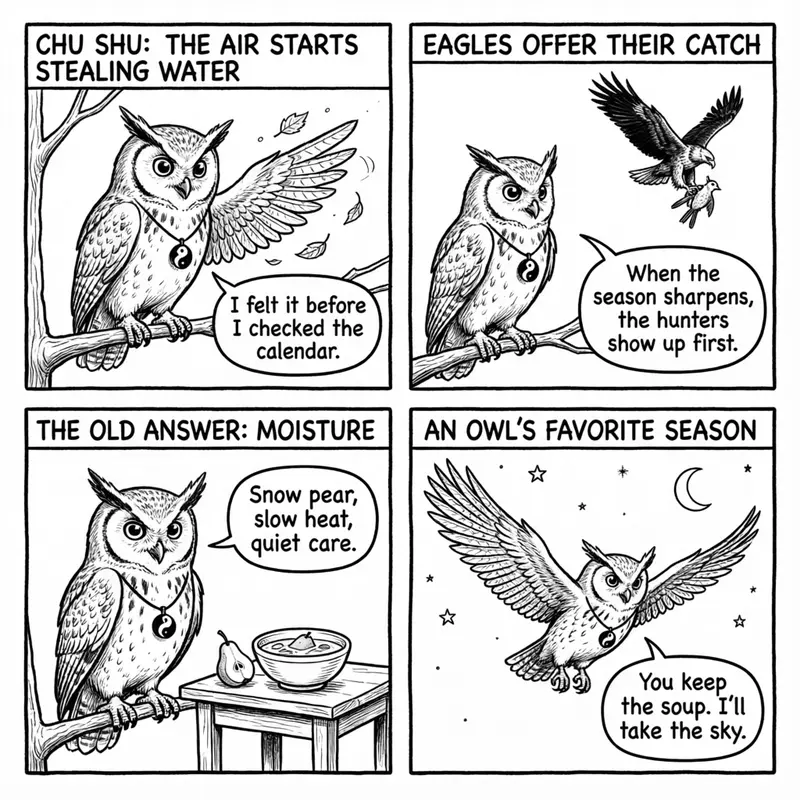
Ollie's take: Hoo-hoo! The heat backs off and the first thing it leaves behind is dry air. Don't fight it. Reach for the pear.
The air is different this week, and it is not your imagination. The heat is still around, sure, days can still push warm, but something has shifted underneath it. For a lot of us, skin feels a little tighter than it did in July, throats catch after too much talking, and lips crack before we notice we've been licking them. Not everyone, and not everywhere, but it's a real pattern for plenty of people this time of year.
That's dryness moving in. And in the Chinese solar calendar, there's a name for the moment we just crossed: Chu Shu (choo shoo), the Limit of Heat. I'm Ollie, a screech owl, and I noticed this change from my usual perch before I ever checked the calendar. My feathers felt different on the evening air, drier and lighter, easier to spread. I tilted my head, ear tufts flicking forward, testing the weight of the air the way I do every night before I leave the roost. That's how I knew the heat had started to loosen its grip, and tonight I want to talk about what comes next.
Because here's the thing nobody warns you about: when the heat backs off, it doesn't hand things over to cool, gentle air. It hands things over to dry air first. And that dry stretch has its own old logic behind it.
What Chu Shu Means
Chu Shu falls around August 23, and the name translates roughly as "out of the heat": the point where summer's grip starts loosening. It's the fourteenth of twenty-four solar terms.
Old agricultural almanacs split each solar term into three five-day phases, called hou. For Chu Shu, the three phases go like this: eagles begin to offer birds, heaven and earth begin to turn solemn and dry, and the grain begins to ripen.
That first one always gets me: eagles offering birds. The old phrasing, ying nai ji niao, has a formal, almost ceremonial ring, and the usual gloss is that eagles begin to offer the birds they take. All summer the margins belonged to songbirds, and then one week the sky starts carrying a different kind of shadow. The old almanacs didn't write this as a metaphor; they wrote it as weather, the same way you'd note the first cold morning. When the season sharpens, the hunters show up first. The second phase is the one that matters most for us tonight: heaven and earth beginning to turn solemn, tiandi shi su in the old phrasing, poetic shorthand for the air itself getting dry and still. The third phase is the grain beginning to ripen toward harvest, fields turning gold while the air above them turns crisp.
In many places, nights start cooling noticeably during this stretch while afternoons can still feel like summer, and rain gets scarcer depending on where you live. Underneath all of it, in a lot of regions, moisture is quietly leaving the air. It's a general map, not a local forecast.
The Dryness Has a Name
There's a term for this stretch in Chinese medicine tradition: qiu zao, autumn dryness. It's not a diagnosis, and I want to be upfront about that from the start: this whole article is about culture and traditional thinking, not medical advice. But the idea itself is old, specific, and worth understanding on its own terms.
In the old framework, autumn is the season paired with the Lung, fei. And the Lung, according to this tradition, "likes moisture and dislikes dryness." When the season turns dry, the old texts describe dryness as something that works against the body's fluids, jin ye, a term that covers all the moisture the body is thought to hold and circulate.
The Lung, in this framework, is also connected to the skin and body hair, and it's said to open into the nose. It pairs with the Large Intestine. So when you look at the classic early-autumn complaints, like dry skin, a scratchy throat, a dry nose, cracked lips, and even some digestive unease, they cluster right along that old anatomical map. That's not a coincidence in the traditional view. It's the whole point of the framework.
None of this is a clinical claim. It's a very old lens for noticing that a handful of separate symptoms tend to show up together at the same time of year, and giving the cluster a name and a story.
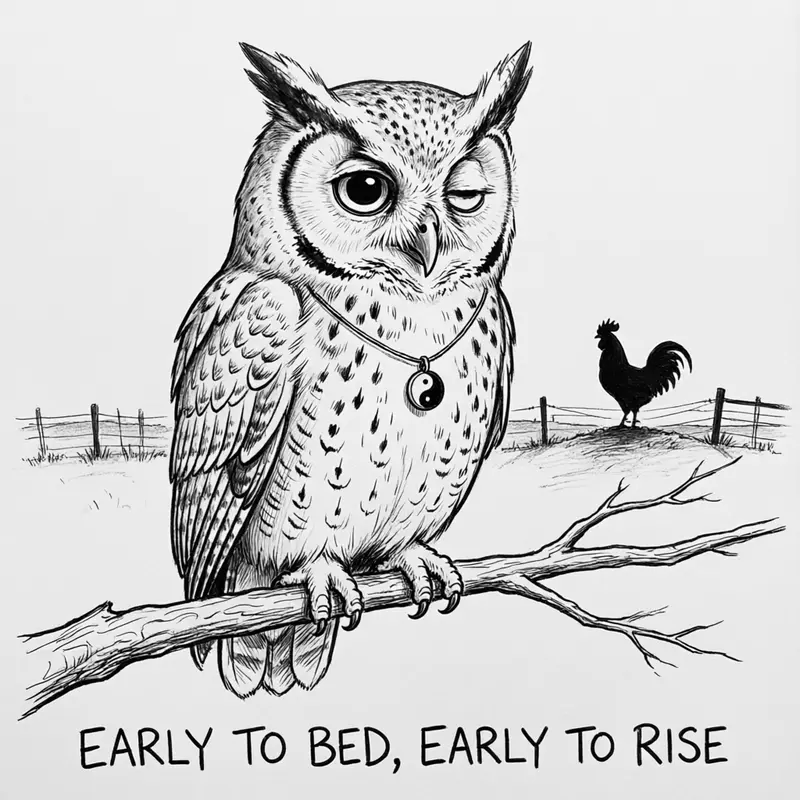
The Suwen, one of the foundational texts in the Huangdi Neijing corpus (compiled and layered over centuries by many hands), has a passage about the autumn months that's stuck around for a reason. It opens by calling this season rong ping, often translated as "being at ease and settled" — a word pair that treats calm as the natural posture of the season, not a mood you have to manufacture. Then it says, roughly, that people should rise early and go to bed early, right along with the chickens, and keep the mind calm and settled. Autumn, in this reading, is a season of gathering and settling in, not stretching, expanding, or spending yourself.
One distinction before we go further: this seasonal dryness is not what the tradition calls yin xu, a constitutional pattern. Qiu zao is about the season; yin xu is about the person.
The dryness itself is also understood as gradual, not a switch that flips on August 23. In the traditional account, early autumn tends toward what's sometimes called warm dryness, wen zao, because summer's heat is still lingering in the afternoons while the air loses moisture. As the season deepens toward White Dew and the Autumn Equinox, the same tradition describes a cooler, sharper dryness, liang zao. The distinction matters because the old food logic answered each kind a little differently: warm dryness was traditionally met with cooler, juicier things like pear and water chestnut, while cool dryness called for gentler warmth, like honey in warm water or cooked yam. Same direction, different feel. Pay attention to what the air is taking, and answer it with moisture.
Ollie Speaks
I'll admit it: I've been waiting all year for this stretch. Most nights I patrol from the same ridge beam, ear tufts pricked forward, and in summer the air is thick enough to fly through like soup. The songbirds are still fussing at dusk, the insects never shut up, and by the time the sky clears I'm tired of sharing it. Chu Shu nights are different. The air thins out, the sky opens, and the night feels lighter on my feathers before I even push off. The dark belongs to creatures like me again.
So while everyone else is noticing dry skin and scratchy throats, I'm quietly grateful. Dry, cool, clear nights are an owl's version of paradise. You can keep your pear soup and humidifiers. I'll take the open sky and the lift under my feathers.
The Old Food Logic of Moistening
The traditional response to qiu zao has a name too: run zao, moistening dryness. And it shows up almost entirely through food, which is where this gets genuinely fun instead of clinical.
Snow pear sits near the top of the list. In a lot of families, there's a habit of gently cooking pear with a little rock sugar, sometimes with the core hollowed out and a few goji berries tucked inside, simmered slow until the pear turns soft and translucent. It's less a recipe than a small ritual, the kind of thing a grandmother makes without writing down amounts. It isn't medicine. It's just what people reach for when the air turns dry, the way you might reach for soup when it's cold out.
Tremella, or white fungus, has an old nickname that always makes me smile: "the poor man's bird's nest." Bird's nest soup was historically a luxury item, expensive and hard to get, and tremella was the humble, affordable stand-in that ordinary households could cook with, a pale, gelatinous fungus simmered slow until it turns silky. The food logic is all about moisture, texture, and softness, the opposite of what dry air does to everything it touches. I adjusted the little pendant around my neck, a gift from a wandering herbalist years back, and considered the pattern. Pale foods, soft textures, moisture where the air had taken it. Even for an owl who doesn't cook, the logic held.
Lily bulb shows up too, along with honey, Chinese yam, lotus root, water chestnut, and white radish. It's a long list, but there's a pattern running through it: pale, cooling, moisture-rich foods, mostly plant-based, mostly simple, mostly things that would have sat in a market stall in early autumn for as long as this solar term has had a name.
And then there's duck, one of my favorites in the whole solar calendar, because it's not random; it fits the same food logic as everything else on this list. The custom is strongest in particular regions rather than universal, and every place has its own version: some roast it, some braise it, some turn it into soup. Duck meat is traditionally understood as moistening and cooling in nature, which lines up with what the season is asking for in the old framework. The cooking varies; the rhyme doesn't.
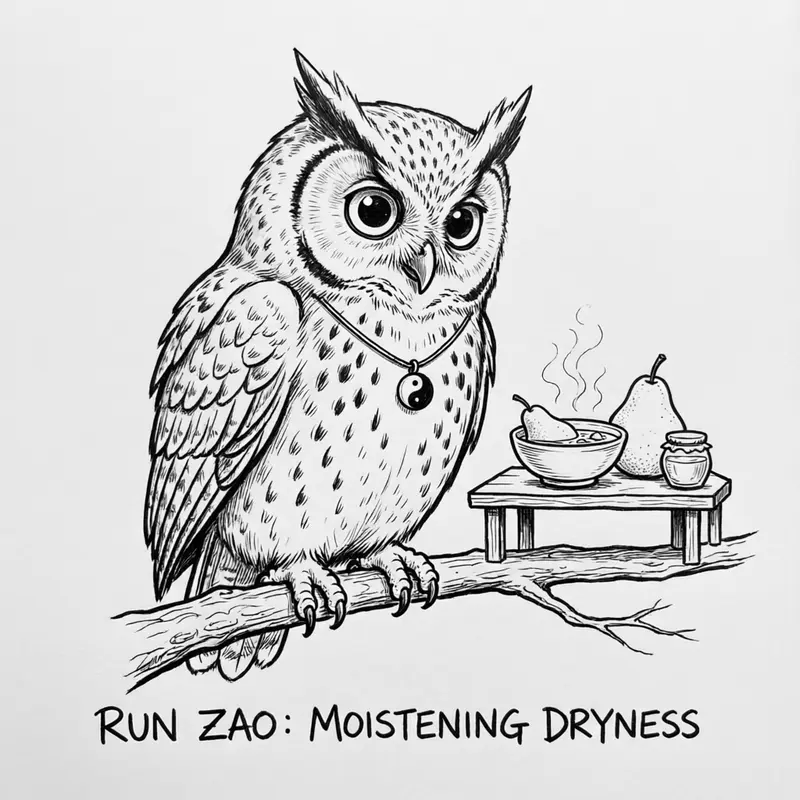
None of this is a prescription, and I want to say that plainly. These are cultural food habits, passed down through generations of home cooks, not clinical recommendations. If you've got a specific health condition, that's a conversation for a qualified professional, not a blog post written by an owl.
There's also a quieter point hiding in the tradition: the old food logic was never one-size-fits-all. The same families that reach for pear in early autumn wouldn't necessarily recommend a bowl of it to everyone at the table, and the seasonal manuals always carried that sense of personal measure, of adjusting to how your own body feels. That's the part that makes this feel like culture rather than a rulebook. The air asks for a little more moisture; how much, and in what form, was always left to the person living in the body.
Small Habits for a Dry Season
Beyond food, the tradition leans on a handful of daily habits, most of them stubbornly simple.
Sleep early, rise early. That Suwen line about "rising with the chickens" isn't poetic flourish for its own sake; it reflects the old idea that autumn is a season for settling the body's rhythm down, not pushing it later and later the way summer nights tend to invite.
Drink warm water through the day in small sips, rather than one big gulp when you finally notice you're thirsty. It matches the season's whole spirit: steady and gradual, not sudden.
Avoid heavy sweating if you can help it. This one surprises people, because sweating feels virtuous, like you're doing something right. But the old view treats autumn as a season of gathering rather than spending, the body pulling inward and conserving, the opposite instinct from the sweat-it-out mentality that fits summer so well.
If the air indoors feels dry, a damp cloth or a small humidifier can take the edge off. A bowl of porridge in the morning with a few lily bulbs or slices of yam stirred through is another old habit, and it doesn't need a special occasion.
Skincare gets gentler too — less stripping, more replenishing, which tracks with everything else on this list once you notice the pattern.
And then there's the emotional side, which I think gets skipped over too often. The tradition holds that sadness is the emotion tied to autumn, the season where things start letting go rather than holding on. The old advice is to keep the mind calm and settled, to let things go a little more easily, rather than gripping tight the way you might in the busier months. It's less about forcing cheerfulness and more about not fighting the season's own direction.
A Small, Ordinary Kind of Care
None of this is dramatic. Nobody's claiming a pear will fix a scratchy throat, and nobody should. The tradition points instead to something quieter, a way of noticing that the air has changed, and responding to that change with small, ordinary gestures instead of ignoring it until winter arrives.
A pear cooked slow with a little rock sugar. An earlier night. A sip of warm water instead of a gulp of cold. A calmer mind, willing to let a little go instead of holding on so tight.
That's the whole answer, and it was never complicated. The air is asking for a little more care, and people have been answering the same way for a very long time.
As for me, I'll be out in the clear, dry dark, finally getting my season back. If you hear a soft hoo from the roofline, that's me checking in on the air.
FAQ
What is Chu Shu and when does it happen?
Chu Shu, meaning "Limit of Heat," is a solar term in the traditional Chinese calendar that falls around August 23 each year. It signals that summer's heat is loosening its grip, even though warm afternoons often continue. Its three traditional five-day phases are eagles beginning to offer birds, heaven and earth beginning to turn solemn, and the grain beginning to ripen. Nights start cooling while days can still feel like summer, and it's a transitional marker rather than a sudden shift.
What does qiu zao, or autumn dryness, mean in TCM tradition?
Qiu zao refers to the dry quality of air that TCM tradition associates with early autumn, following Chu Shu. In this framework, autumn corresponds to the Lung, fei, which is traditionally described as favoring moisture and disliking dryness. Dryness is said to work against the body's fluids, called jin ye. Because the Lung is linked to skin, body hair, and the nose in this tradition, common complaints include dry skin, scratchy throats, and dry lips. This is a cultural and historical framework, not a medical diagnosis, and shouldn't replace guidance from a qualified professional.
What foods are traditionally eaten to counter autumn dryness?
The traditional practice of run zao, or moistening dryness, centers on foods like snow pear, tremella (white fungus), lily bulb, honey, Chinese yam, lotus root, water chestnut, and white radish. Duck is also traditional around Chu Shu, since it's considered moistening and cooling in nature, matching what the season is thought to call for. These are long-standing family and regional food habits, not prescriptions or guaranteed remedies. Anyone with specific health conditions or dietary concerns should speak with a qualified professional rather than relying on seasonal food customs alone.
How do I know if my symptoms are autumn dryness or something else?
You don't, not from a blog post. Autumn dryness is a seasonal pattern from traditional observation, not a diagnostic tool. If you have a persistent cough, throat pain that doesn't improve with rest and hydration, or any symptom that concerns you, see a healthcare provider. The food habits in this article are cultural responses to mild seasonal discomfort, not treatments for illness. If the dryness is mild and seasonal, enjoy the old habits; if it persists or worries you, a professional opinion beats a blog post.